July 24, 2025/
No Comments
History of the Information Radiators : 1980s – Visual Management: The concept of visual control and visual management originated in Japan...

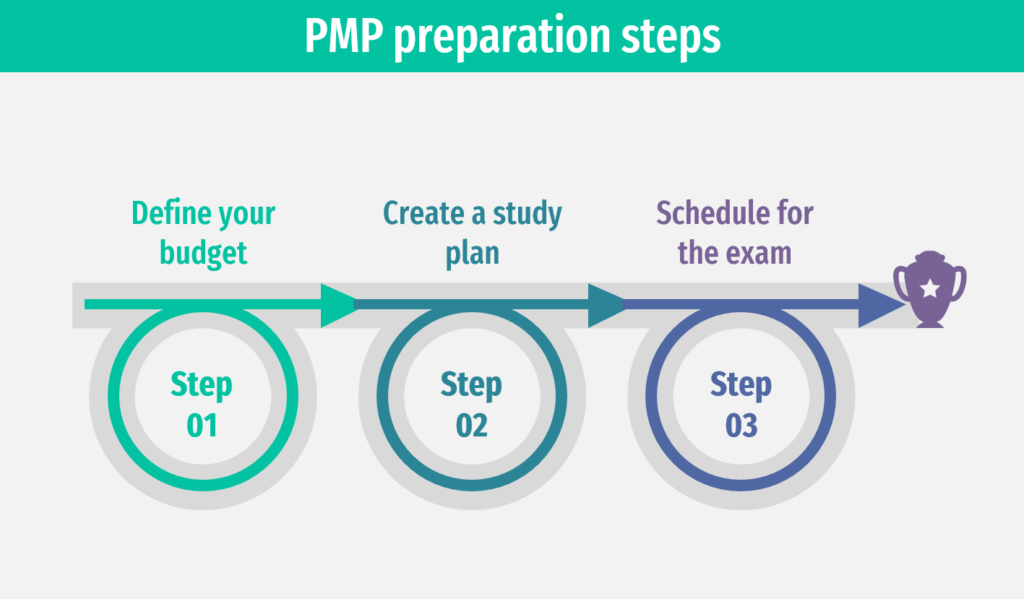
PMI® has announced that starting 1st July 2020, the PMP® exam will reflect new content and the last day to take the current version of exam will be 30th June 2020.
The new exam content outline was published by PMI® on 30th June 2019.
In this context, this article focus on providing complete insight on the following topics.
1. Why the Exam is Changing?
2.What you can expect in the new version of the exam?
3. Exam updation Vs PMBOK® Guide updation?
4. Is the exam becoming more difficult?
5. How to prepare for the new version of the exam?
PMP® credential recognizes an individual’s ability to manage projects. It proves you have the specific skills and experience in leading and directing projects that employers seek. So PMI®, regularly updates Exam content outline in order to keep up with the emerging trends of projects and to retain PMP® relevant to the growing expectation of the employer and to ensure it reflects accurately the practices of the project management practitioner. PMI® conducts Role Delineation Study (RDS) or Job Task Analysis (JTA) to update the examination content outline.
So updation of PMP® examination is not something new. This usually happens at an interval of 3 to 5 years.
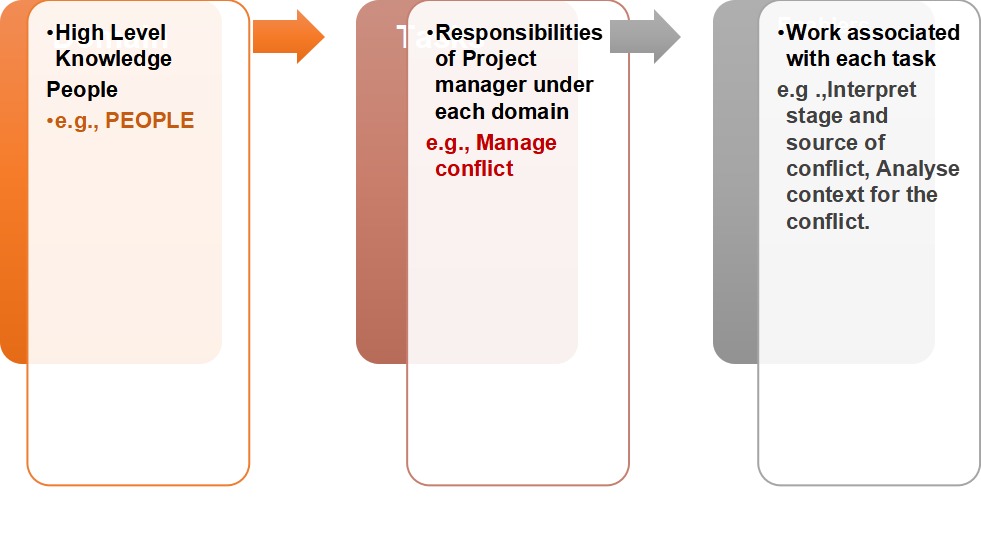
The current exam content outline focused on five domains, viz., Initiating, Planning, Executing, Monitoring and Controlling and closing. Each domain contains tasks, knowledge and skills required to competently perform the tasks, that are measured through the PMP® certification process.
The Exam content outline for July 2020 consists of three domains viz., People, Process and Business environment, which in turn consists of tasks and enablers.
What is a Domain, Task and Enabler?
| Current Exam Content Outline | July 2020 Exam Content Outline | ||
| Domains | Percentage of Questions | Domains | Percentage of Questions |
| Initiating | 13% | People | 42 % |
| Planning | 24% | Process | 50% |
| Executing | 31% | Business Environment | 8% |
| Monitoring and Controlling | 25% | ||
| Closing | 7% | ||
So we can say that the current exam content outline to a greater extent reflects the process domain, whereas the updated one equally emphasize on team building, managing team, engaging stakeholders and increased focus on addressing internal and external business environment.
50% of the questions will represent predictive project management and other half will represent agile or hybrid approaches. Predictive, agile and hybrid approaches will be found throughout the three domain areas listed above and are not isolated to any particular domain or task.
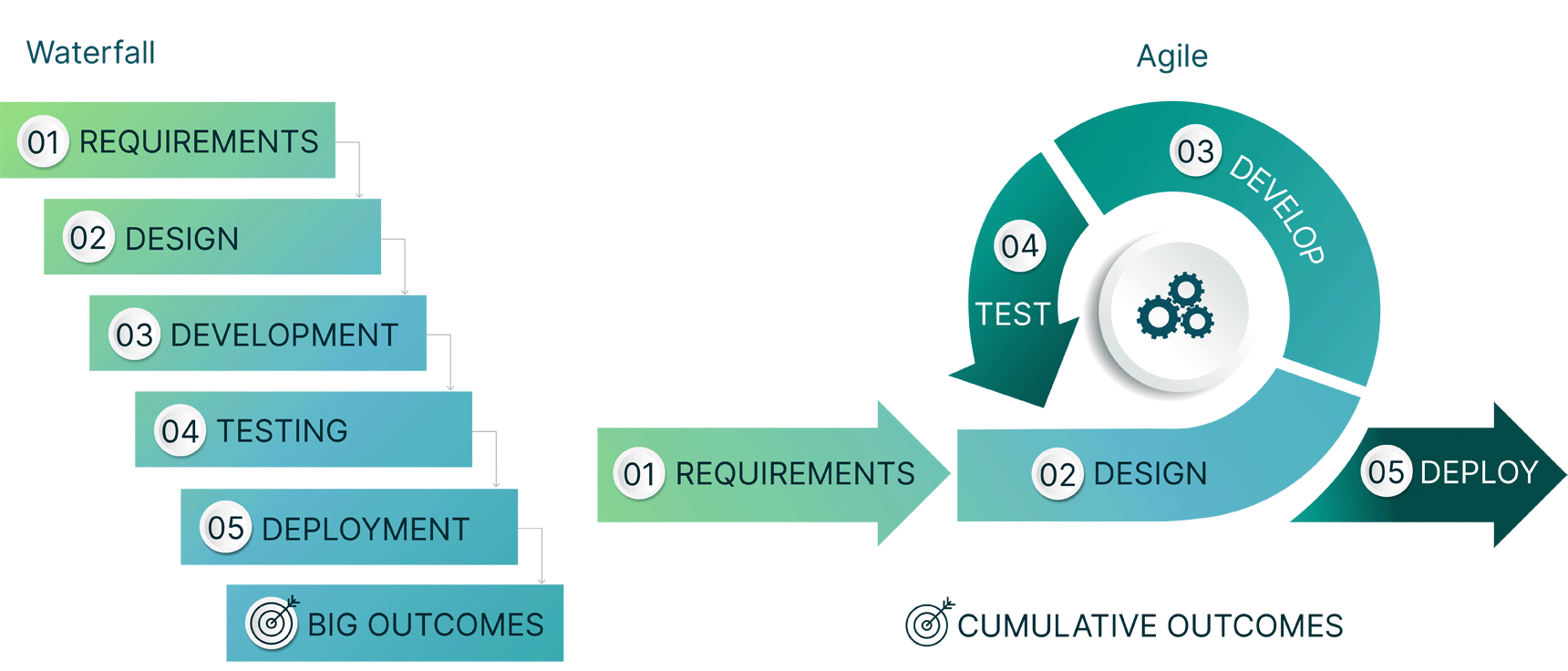
Predictive project management methodology is otherwise called traditional or waterfall methodology. Predictive approach would suit if the project’s scope is determined early and that do not require frequent changes in schedule or cost as well. On the other hand, agile project management approach accounts for evolving scope and focus on continuous releases.
Project managers should choose appropriately choose the project approach based on the nature of the project
There is a general misconception among the PMP® aspirants, that PMP® is an examination completely based on application knowledge of PMBOK® Guide. This may be because most of the PMP ® preparatory training institutes / instructors are not referring to exam content outline during the session, instead their concentration is completely on PMBOK® Guide
PMBOK® Guide is not the syllabus for PMP® Exam. It is the Exam Content Outline that serves as the syllabus of the examination.PMP® exam questions are mapped against the PMP Examination Content Outline and not the syllabus. PMBOK® Guide is a go-to reference book. But the exam isn’t based on it alone.
The PMBOK guide will be updated every four years. The last updated version (PMBOK® sixth edition) was released in SEP 2017. So we can expect the next updated version to be released on 2021 or 2022. Hence PMBOK® guide sixth edition is still a valid reference and one can use it as a primary reference material, even after July 2020.
Relatively Yes. It is still 200 questions, 4hrs exam. But what could make the exam more difficult is the volume of material to be referred. At least a fair preparation on Agile Practice Guide in addition to PMBOK® Guide becomes mandatory.
Secondly you should be able solve questions considering two or more different scenarios, namely predictive, agile or hybrid project environment. This requires in depth comparative study as well.
But if your training institute or instructor provide you with appropriate materials, transition becomes smooth
If you are preparing to take the exam after July 2020, then we would suggest the following
Author: Harold Kerzner
Publisher: Wiley
Author: Robert K. Wysocki
Publisher: Wiley
Author: Colleen Garton with Erika McCulloch
Publisher: MC Press
Author: David Cleland and Lewis Ireland
Publisher: McGraw-Hill
Author: Kathy Schwalbe
Publisher: Cengage Learning
Author: Kenneth S. Rubin
Publisher: Addison-Wesley
Author: Tom Kendrick
Publisher: AMACOM
History of the Information Radiators : 1980s – Visual Management: The concept of visual control and visual management originated in Japan...
PMI® has announced that starting 1st July 2020, the PMP® exam will reflect new content and the last day to take...

Lean is a quality improvement model that improve processes by removing waste or non-value added activities. Lean achieves this by...
As we kick off 2022, COVID-19 saga with its novel variants continues to throttle traditional working environment and challenges organizations...
Over the past few decades the world has realized that traditional (waterfall) way of managing projects does not fit the...
The concept of Agile also is one such adaptation that arose as a response to rapid change, growing complexity and...