July 24, 2025

Uncategorized

5 Agile Project Management Information Radiators

History of the Information Radiators : 1980s – Visual Management:  The concept of visual control and visual management originated in Japan from Toyota Production System ( TPS ) or Lean Manufacturing. Visual Management or ‘Mieruka’ in Japanese is one of the foundational principle in TPS. Late 1990s – Informative Workspace with BVCs Kent Beck who is known as father of Extreme Programming (XP), an agile methodology coined the term Big Visible Charts ( BVC). Informative workspace (  is one of the primary practices recommended in XP, that endorse use of BVCs. Fig 1 : Agile team space with Digital boards and BVCs Early 2000s: The term information radiator is attributed to Alistair Cockburn. He used radiator as a metaphor. Radiators as seen as items that emit some form of heat, light, or sound. When it comes to Agile information radiators, information is being emitted.   Information Refrigerator Vs Information Radiator When we store information in a folder or in a database , it is called as information refrigerator . Too much information, irrelevant information is as bad as no information. The information in the form of information refrigerator requires extra effort to be pulled as they are not instantly visible. While information radiators are visible piece of vital information. Agile recommends vital project data to be always  in front and centre. 1. Product Road Maps : These are visual overviews of product’s releases and release points. Product owners creates product map to visualize how the solution will evolve over time. It is essential to communicate the road map to the team in order to ensure the team understands the product vision and direction and the changes in the product map.     Fig 2 : Product Road Map 2. Kanban Boards :Kanban is a Japanese term that means sign board. Kanban system were first used in Toyota as a visual scheduling system. It helped to enable pull flow production ( producing based on the demand of the next process or customer)  or just-in-time production. It was used to limit queue or regulate inventory.  The concept of Kanban was customized to be used in Project management. Agile projects visualize workflow, limit work in progress, identify bottlenecks through Kanban boards and thereby increase efficiency Fig 3 : Kanban Board Fig 4 : Azure Task Board Figure 4 : Azure Task Board 3. Burn Up and Burn Down Charts : These charts helps the team to track their progress and adjust their velocity ( number of story points completed in one iteration) The burn down chart shows how much work or story points are remaining while burnup chart shows how much work or story points are done. Burn up chart also shows the change in scope ( reduction or addition of stories) Fig 5 : Burn Down Chart      Fig 6 : Burn Up Chart 4. Cumulative Flow Diagrams : This diagram shows the work in progress ( WIP) in a graphical form. In other words , it visualizes your Kanban board in a graphical form. It shows the stability of your process and showcase weakness. In the following graph, the horizontal axis represents time , vertical axis represents cumulative number of cards in the work flow Kanban lanes at various intervals. The three bands ( you can use more than three bands representing each stage in the Kanban board ) represents to-do (red), In progress ( blue) and done ( green) Fig 7 : Bands Progressing in Parallel represents Stable workflow Fig 8 : Bands continuously narrowing down represents higher throughput Fig 9 : Bands continuously widening represents lesser throughput and bottlenecks 5. Agile ROAM Boards : ROAM model is a risk management approach  to help organizations identify and deal with uncertainties. ROAM stands for Resolve, Own, Accept, Mitigate – the four responses to manage risks. Resolved –  The team agrees that the risk is no longer a concern and is eliminated Owned – Someone in the team is assigned to resolve the risk Accepted – Some risks have to simply acknowledged, understood and accepted Mitigated – The team develops a plan to reduce the impact of the risk. ROAM Boards aids in transparent assessment and ensuring the team is aware and aligned in handling risks. Benefits of Information Radiators Transparency : As Dourish and Belloti describe “ Awareness is understanding the activities of others , which provide context for your own activity” , These ubiquitous charts improves informedness of the team. This Low tech High touch tools are best to share information in a concise yet effective manner. Accountability : It encourages the team to openly discuss problems and their root cause. It brings obstacles to team’s focus rather than blaming. It brings uncomfortable bad news to discussion and promote discussions during retrospective where the team members reflect on what went right or wrong to adjust their own behavior. Collaboration : Creating, maintaining and updating these physical artifacts . It helps the team to think, plan, visualize workflow.it eliminates long hours spent in preparing status reports and supports collaborative decision making. It enable collaboration not only among the team members but also with the customers
Uncategorized

PMP® Exam is changing on 1st July 2020

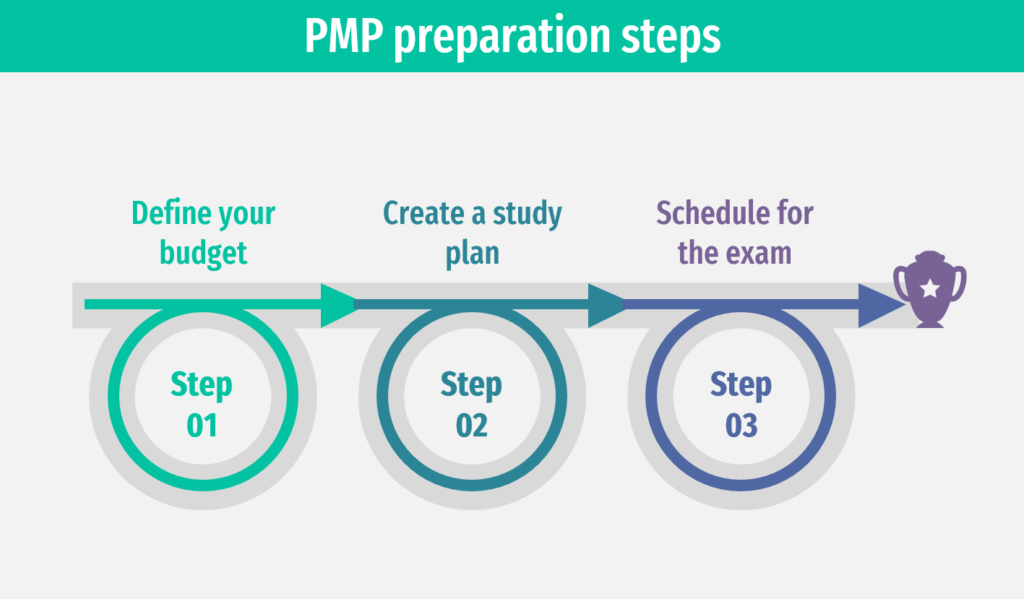
PMI® has announced that starting 1st July 2020, the PMP® exam will reflect new content and the last day to take the current version of exam will be 30th June 2020. The new exam content outline was published by PMI® on 30th June 2019. In this context, this article focus on providing complete insight on the following topics. 1. Why the Exam is Changing? 2.What you can expect in the new version of the exam? 3. Exam updation Vs PMBOK® Guide updation? 4. Is the exam becoming more difficult? 5. How to prepare for the new version of the exam? 1.Why is the Exam changing? PMP® credential recognizes an individual’s ability to manage projects. It proves you have the specific skills and experience in leading and directing projects that employers seek. So PMI®, regularly updates Exam content outline in order to keep up with the emerging trends of projects and to retain PMP® relevant to the growing expectation of the employer and to ensure it reflects accurately the practices of the project management practitioner. PMI® conducts Role Delineation Study (RDS) or Job Task Analysis (JTA) to update the examination content outline. So updation of PMP® examination is not something new. This usually happens at an interval of 3 to 5 years. 2.What are the changes? 2.a Change 1: Three domains instead of five domains. The current exam content outline focused on five domains, viz., Initiating, Planning, Executing, Monitoring and Controlling and closing. Each domain contains tasks, knowledge and skills required to competently perform the tasks, that are measured through the PMP®  certification process. The Exam content outline for July 2020 consists of three domains viz., People, Process and Business environment, which in turn consists of tasks and enablers. What is a Domain, Task and Enabler? Current Exam Content Outline July 2020 Exam Content Outline Domains Percentage of Questions Domains Percentage of Questions Initiating 13% People 42 % Planning 24%  Process 50% Executing 31% Business Environment 8% Monitoring and Controlling 25% Closing 7% So we can say that the current exam content outline to a greater extent reflects the process domain, whereas the updated one equally emphasize on team building, managing team, engaging stakeholders and increased focus on addressing internal and external business environment. 2.b Change 2: Predictive and Agile/Hybrid Approach 50% of the questions will represent predictive project management and other half will represent agile or hybrid approaches. Predictive, agile and hybrid approaches will be found throughout the three domain areas listed above and are not isolated to any particular domain or task. Predictive Vs Agile Project Management approach Predictive project management methodology is otherwise called traditional or waterfall methodology. Predictive approach would suit if the project’s scope is determined early and that do not require frequent changes in schedule or cost as well. On the other hand, agile project management approach accounts for evolving scope and focus on continuous releases. Project managers should choose appropriately choose the project approach based on the nature of the project 3.PMBOK® Guide Vs PMI® exam content outline updation There is a general misconception among the PMP® aspirants, that PMP® is an examination completely based on application knowledge of PMBOK® Guide. This may be because most of the PMP ® preparatory training institutes / instructors are not referring to exam content outline during the session, instead their concentration is completely on PMBOK® Guide PMBOK® Guide is not the syllabus for PMP® Exam. It is the Exam Content Outline that serves as the syllabus of the examination.PMP® exam questions are mapped against the PMP Examination Content Outline and not the syllabus. PMBOK® Guide is a go-to reference book. But the exam isn’t based on it alone. The PMBOK guide will be updated every four years. The last updated version (PMBOK® sixth edition) was released in SEP 2017. So we can expect the next updated version to be released on 2021 or 2022. Hence PMBOK® guide sixth edition is still a valid reference and one can use it as a primary reference material, even after July 2020. 4. Is the exam becoming more difficult?  Relatively Yes. It is still 200 questions, 4hrs exam. But what could make the exam more difficult is the volume of material to be referred. At least a fair preparation on Agile Practice Guide in addition to PMBOK® Guide becomes mandatory. Secondly you should be able solve questions considering two or more different scenarios, namely predictive, agile or hybrid project environment. This requires in depth comparative study as well. But if your training institute or instructor provide you with appropriate materials, transition becomes smooth 5.What should you do next, if you are planning to take the exam on or after July 2020? If you are preparing to take the exam after July 2020, then we would suggest the following Other reference materials for the updated Exam Content Outline 1.Project Management: A Systems Approach to Planning, Scheduling, and Controlling Author: Harold Kerzner Publisher: Wiley 2.Effective Project Management: Traditional, Agile, Extreme, Hybrid Author: Robert K. Wysocki Publisher: Wiley 3.Fundamentals of Technology Project Management, 2nd Edition Author: Colleen Garton with Erika McCulloch Publisher: MC Press 4.Project Managers Portable Handbook, 3rd Edition Author: David Cleland and Lewis Ireland Publisher: McGraw-Hill 5.Information Technology Project Management, 7th Edition Author: Kathy Schwalbe Publisher: Cengage Learning 6.Essential Scrum: A Practical Guide to the Most Popular Agile Process Author: Kenneth S. Rubin Publisher: Addison-Wesley 7.The Project Management Tool Kit: 100 Tips and Techniques for Getting the Job Done Right Author: Tom Kendrick Publisher: AMACOM

Uncategorized

Four Significant Lean Metrics

Lean is a quality improvement model that improve processes by removing waste or non-value added activities. Lean achieves this by optimizing flow and thereby the resources . Flow represents the manner in which the work progresses through the system. When there is a  good flow , the work progress through the system consistently and continuously.  Customers receives the delivery at the right time and at right quantity. When the flow is bad, customer waiting time increases, stops due to bottlenecks absence of feedback loop between departments which means that upstream processes do not produce based on the demand of downstream processes, inventories are high. It is important to visualize the flow , measure the right flow parameters in order to identify the weaknesses and optimize it. Cycle Time ( CT ) Cycle time can be defined as the time taken complete a specific task in the value stream. Start your stop watch when the task / process starts and stop the stopwatch when it ends. This time is called as cycle time. For example in a manufacturing process time taken to complete one unit in a particular workstation or in a service industry , time taken by a customer service executive to complete one call can be called as cycle time When there is only one workstation for the complete assembly then cycle time is time taken to assemble one unit In some cases the cycle time can be calculated by including the time that supports the process viz., loading and unloading time. Sometimes the cycle time is calculated by only accounting the touch time -i.e., time to work on the unit and leaving everything else. Cycle time may include small stops , slow runs but does not include downtime , change over time or time taken due to any abnormal conditions Cycle time can be calculated for one piece or in a batch production it can be calculated for one batch . Cycle time per unit = process duration / total units produced in that duration. For example in a workstation , 100 units were produced in 80 minutes , then Cycle time is 80/100 = 0.8 minutes  or 48 seconds per unit Cycle time loss can be calculated by comparing the bench mark  cycle time (ideal cycle time ) with actual cycle time. Cycle time loss = Process run time – ( Total units * Ideal Cycle time ) In continuation to the above example , If the ideal cycle time of the process is 0.5 minutes then cycle time loss = 80 – ( 100 * 0.5) = 30 minutes cycle time loss Cycle time can be reduced by preventive maintenance measures , removing obstacles, training. Change over time ( CO )  The time taken for transition time between production runs . for example in manufacturing the change over time is the time between the last product rolls off the line in a given production run to when the start of the next run begins Changeover time = the time elapsed from the last good part of the previous run, to the first good part of the following run It includes clean up time , set up time and start up time. For example in a hospital changeover time is the time between two surgeries. The changeover time includes cleaning up the operation theatre, resetting the equipment, By reducing changeover time Throughput time While Cycle time is the time taken for a unit / piece to go through one process or operation , throughput time is the time taken for the unit to go through entire value stream. It can also be defined as the time taken between an order placed and order delivered . This is often called as call to cash time . In a manufacturing process the time taken from the first to last process. In a hospital it is the time taken between the patient entry to exit . Throughput time includes the following Throughput time can be reduced by reducing process cycle time, by reducing movement time by improving layouts , by enabling single piece flow to reduce waiting time . Takt Time Takt is a Sanskrit word means rhythm  ( also Takt is a short form of German Word Taktzeit which means Baton). Takt time is calculated to know the demand rate of the customer upon which the production rate has to be synchronized . The rate at which we need to produce a product in order to satisfy customer demand . Takt time can be calculated by calculating available work time over customer demand rate. Worker’s break , scheduled maintenance and changeover are excluded when computing the available production time. Takt time = Available work time / Customer Demand Rate Assume the available working time is 10 hours per shift and a lunch break of 1 hour and tea break of 20 minutes. There is a mandatory briefing in the morning for 10 minutes . The scheduled work days are 6 per week. The customer demand is 60000 units per week Calculating Available Work time per day = 10 hrs – 1 hr – 20 minutes- 10 minutes = 510 minutes=30,600 seconds per day   Calculating customer demand rate per day = 60000/ 6 = 10,000 units per day Takt time = Available time ( 30,600 seconds per day) / 10,000 units per day = 3.06 seconds per unit. If the cycle time and throughput time does not match with the Takt time , it leads to over production or under production. Over production leads to inventory and bottle necks which is a waste  and under production leads to late delivery. In conclusion reduced cycle time will optimize the bottleneck process  and improve delivery per process, lower the difference between sum of cycle time of the processes and throughput time to eliminate non value added time and thereby improve responsiveness to customer or reduce the time to market, match the throughput time with Takt time to keep the inventory

Uncategorized

Project Management 2022 and Beyond Ranging from AI to EI

As we kick off 2022, COVID-19 saga with its novel variants continues to throttle traditional working environment and challenges organizations to explore new ways to sustain and required them to adapt to changes in technological, economic and social domains.  Project Management Landscape is of no exception and this volatile situation have presented both challenges and opportunities to project based organizations and its employees. Here are some highlights of the most impactful changes Organizations and Project Management Professionals face in 2022 and beyond and top skills in demand that to counter them: #1 Rise of Remote Work space Demands Virtual Leadership Skills The Wuhan Virus has broken through cultural and technological barriers that prevented remote work in the past and has led to structural shift in project team’s workplace. Despite the array of issues raised due to remote working in the beginning of 2020, soon the organizations understood both the advantages and limitations of letting the employees work from home. Organizations broadened the options and identified the right mix of remote and office-based work based on need of job to counter the limitations while reaping the benefits like tapping into subject matter experts world over, higher productivity, saving cost on facilities, transportation etc.,   Source: Musienko, Yuri.Dec 2021. Merehead, www.merehead.com/blog/project-management-trends-2022/ On the other hand, employees, especially ones who are involved in creative work relished the flexibility that remote working conditions provided them. Being free from external irritants, (long hours on road, noise, visits of other employees etc.,) enabled them to work efficiently resulting in higher productivity. In the APM Salary and Market Trends survey 2020, 66% of respondents reported flexible working was an important criterion for how they chose their job. Virtual Leadership skills will become one of the top skills in demand for future Project Managers. Virtual Leadership provides practical strategies, tools and solutions for the key issues such as isolated and disengaged workforce, ineffective communication, uncoordinated and counter productivity involved in managing at a distance and create cohesive teams across distance, cultures and languages #2 Next Gen Project Management Information System (PMIS) Demands Digital skills The project, program and portfolio management (PPM) software landscape is rapidly changing PMIS includes all the platforms, software and tools that help managers and teams plan, coordinate, and execute every aspect of project or program and portfolio planning and management. The top 5 techno-themes for the future of Project management are Block Chain, Artificial intelligence, Mobile apps, Remote access, Human Machine Collaboration Artificial Intelligence Artificial intelligence – AI Systems are increasingly finding its way into project management tools to monitor and analyze the patterns of project team. Integration of AI systems with popular tools like Slack, JIRA aids to optimize processes. Not-too-distant future AI Bots will soon handle less intensive administrative tasks freeing up project managers time to available for team and focus on more value-added activities. Block Chain Increasing demand for Project Managers with Digital Skills to suit an overarching digital strategy is seen. The Block chain Distributed Ledger Technology (DLT) will protect the project data, eliminate single-point of failure, enable single source of truth. This will greatly help in investigating discrepancies and disputes with external stakeholders such as clients and contractors. Mobile Apps Mobility is no longer a nice-to-have feature but a necessity. Project Managers can keep track of teams, tasks and deadlines on the go. Mobile apps have sealed the huge gap between available data and accessible data. Human Machine Collaboration: Post Covid, organizations are reconsidering the structure and composition of work force, reinventing jobs, realizing power of Artificial Intelligence. According to Deloitte, 41% of surveyed companies have already implemented aspects of cognitive or artificial intelligence (AI) technologies in their workforce, whilst 37% are carrying out pilot programmes. However, only 17% of surveyed executives stated a readiness to manage a collaborative workforce of people, robots and AI.Robots and People work side by side complementing and compensating each other’s limitations.  Autonomation – the concept of human- machine collaboration – provides benefits of automation while protecting the irreplaceable human skills such as empathy, persuasion, courteousness, negotiation, problem-solving, and strategic decision-making. Remote Access and Cyber security: Remote teams confront challenges that co-located teams do not, such as asynchronous time zones and work flow. As the usage of remote project management and team collaboration tools rise, there is a growing emphasis on data security. Project Manager being responsible for overseeing project risks, it is the onus of the project manager to identify, evaluate and manage potential security threats and protect sensitive project data. Cyber Incident Planning and Response is therefore will be a in demand skill for project manager of any industry. #3 Hybrid Methodology – Seems to Stay The combination of co-located and distributed teams have triggered another significant change in the way projects are managed – Hybrid Project Management (Hybrid of Waterfall and Agile). Almost the whole of the 20th century was dominated by the predictive or waterfall model of project management. Project Managers regardless of their industry, were used to creating WBS, Gantt charts etc., tools that aids the project manager to plan in detail in the beginning. In the starting of 21st century with the rise of software projects, agile gained traction. Agile is seen as a magic bullet to solve waterfall problems such as meticulous processes, restrictive procedures and inadaptability to rapid market changes. Frequent smaller deliveries and continuous stakeholder influence throughout the project helps to accommodate requirement changes without derailing the project. Yet soon it was realized that agile is not panacea, as it does not suit projects that requires absolute estimates and managing constraints like strict schedule or budget. Consequently, Hybrid project management approach picked up steam that combines the best of both the worlds. With hybrid approach, project boundaries are defined upfront with accurate estimates as in the waterfall – where execution and delivery through several iterations as Minimum Viable Products are delivered. Global trends in project management survey of projectmanager.com 2022 found that only 12 % of PMs rely solely on the agile project management methodology, nearly 60%

Uncategorized

Three Popular Agile Methodologies in Project Management

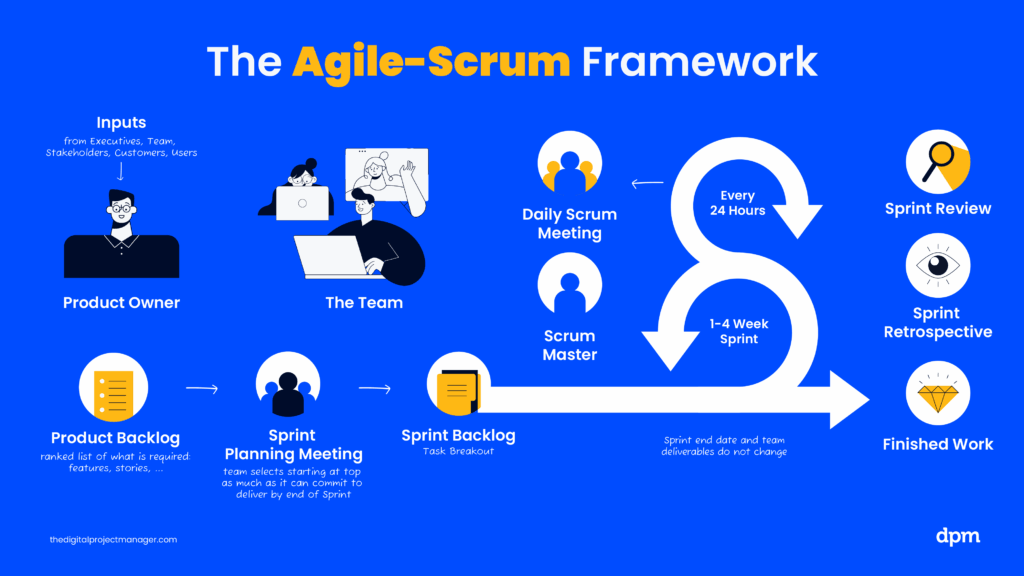
Over the past few decades the world has realized that traditional (waterfall) way of managing projects does not fit the modern world as customers’ requirements today is more dynamic than ever. Rapidly changing market  preferences , investor decisions, disruptive technology , competitive environment now demands quicker delivery yet with more adaptability, and resilience in projects. Agile project management (the term agile means ‘ flexible’ ) address these challenges  as it work on the principle of incremental delivery with continuous collaboration with the stakeholders . This result-focused methodology has its humble beginning in the early 2000s when a group of software developers (including Jeff Sutherland, Bob Martin, Martin Fowler, Alistair Cockburn and other prominent personalities)  met in Utah , US,  delivered Agile Manifesto . Birth of “Agile Manifesto” , its values and principles was a significant breakthrough that laid foundation to manifold methodologies and practices. Agile Manifesto Individuals and interactions Over Processes and Tools Working Product Over Comprehensive Documentation Customer Collaboration Over Contract Negotiation Responding to Change Over Following a Plan That is, while there is value in the items on the right, we value the items on the left more There are numerous methodologies, that is built on the foundation of the Agile Values and Principles . Below are the most popular agile methodologies. Agile methodologies by and large are centered around adaptive planning, self-organization and short delivery times. 1.Scrum Scrum is a simple lightweight framework that helps people and organization to develop and sustain complex products. Ken Schwaber and Jeff Sutherland co developed the scrum methodology and the scrum guide. The Scrum Guide consists of specific Scrum Roles ( Product Owner, Scrum Master, Development Team ), Scrum Pillars, Scrum Events, Scrum Artifacts and Scrum Rules that binds the team together. Following are the Scrum roles and the processes The Scrum Team and its stakeholders inspect the results and adjust for the next Sprint. Repeat the Process again for the next sprint. Sprints are 1 to 4 week length cycle where ideas are turned into value . All the work necessary to achieve the Product Goal happen within sprints. Scrum works under the core principles of Transparency, Inspection, Adaptation (TIA) Transparency is ensuring the work to be visible to everyone to those who perform the work and receive the work. Transparency enables inspection Inspection Scrum artifacts and the progress towards agreed goals must be inspected frequently. At the end of each sprint, the increment is demonstrated to the product owner and customer through sprint reviews. Inspection results from a sprint acts as a feedback to next sprint. Inspection enables adaptation. Adaptation is embracing changes and  improving continuously. Transparency and Inspection drives adaptation. Transparency in the workflow and the results from inspection reveals the area of adjustment required in the product increment and processes. 2. Extreme Programming ( XP) : This agile methodology was developed during 1990s by Kent Beck , who formalized its principles, values and practices in his book Extreme Programming : Embrace Change. XP methodology is applicable for small to mid sized co-located teams , with dynamic requirements. XP works under the 5 values viz., Communication, Simplicity, Feedback, Courage and Respect. Communication : XP stresses on face to face communication, with visual tools like whiteboards or any other drawing mechanism. Simplicity : XP based around the idea of identifying “simplest thing that will work”  in order to identify waste such that it is easy to maintain, support and revise. Feedback : XP emphasize on recognizing improvement areas through constant feedback. XP teams builds, receive feedback and adjusts. Courage  : XP teams takes “ effective action in the face of fear”. It includes courage to raise issues, courage to stop something that does not work, courage to accept feedback. Respect : XP teams respect each other and always be courteous while communicating with each other, providing and receiving feedback and honours relationship in all instances. The values are applied through XP practices such as planning games, Small releases, Pair programming, collective ownership, Continuous integration, Informative workspace etc., In a nutshell, Extreme Programming is about taking the good agile practices to the extreme level. 3. Crystal Crystal methodology is credited to Alistair Cockburn who developed for IBM in 1991.This method is direct outgrowth of agile manifesto. It focus on individuals and interactions over processes and tools. Crystal methodology is based on two core beliefs 1. Teams are enabled to find their own ways and methods to optimize workflows 2.The project team is best suited to determine how to tackle the work on every project, as every project is unique. On the basis of team size, project priority, this methodology is classified into various colour families.   Crystal Clear Crystal Yellow Crystal Orange Crystal Red Crystal Maroon Diamond & Sapphire Team size 1 to 6 7-20 21-40 40-80 80 to 200 200+ Nature of Project Single workspace,Short- term Project Feedback from real users involved with automatic testing Medium – sized project1-2 years with a release every 3-4 months Smaller teams are formed withinTraditional development method is followed Large ProjectsMethods vary based on the need of the application. Very large project Potential risk of human life is involved https://www.toolsqa.com/agile/crystal-method Cockburn emphasize on the following three traits of Crystal methodology 1. Human Powered- The project should be flexible and tailored to the preferred work modalities of the team involved. 2. Adaptive  – There are no fixed tools ; tools can be altered to meet team’s specific needs 3.Ultra-light – It does not require huge documentation for reporting as it facilitates more face to face osmotic communication. In a nutshell from the words of Cockburn, crystal works with the power invested by people, extremely light and stretch-to-fit To summarize  agile methodologies entrust continuous delivery of value-adding product, by facilitating constant communication with the client and among  the team members.

Scroll to Top