July 24, 2025/
No Comments
History of the Information Radiators : 1980s – Visual Management: The concept of visual control and visual management originated in Japan...

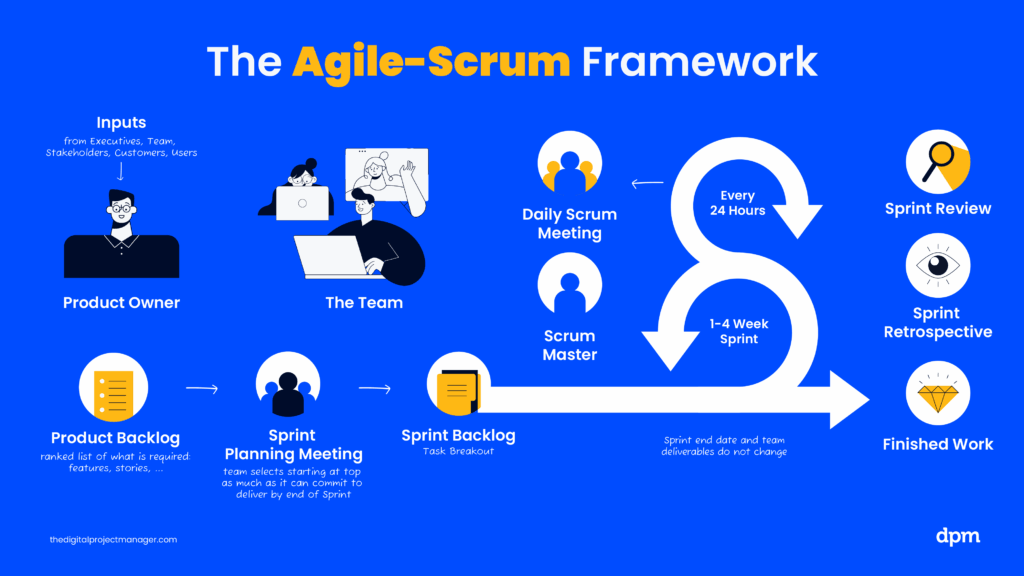
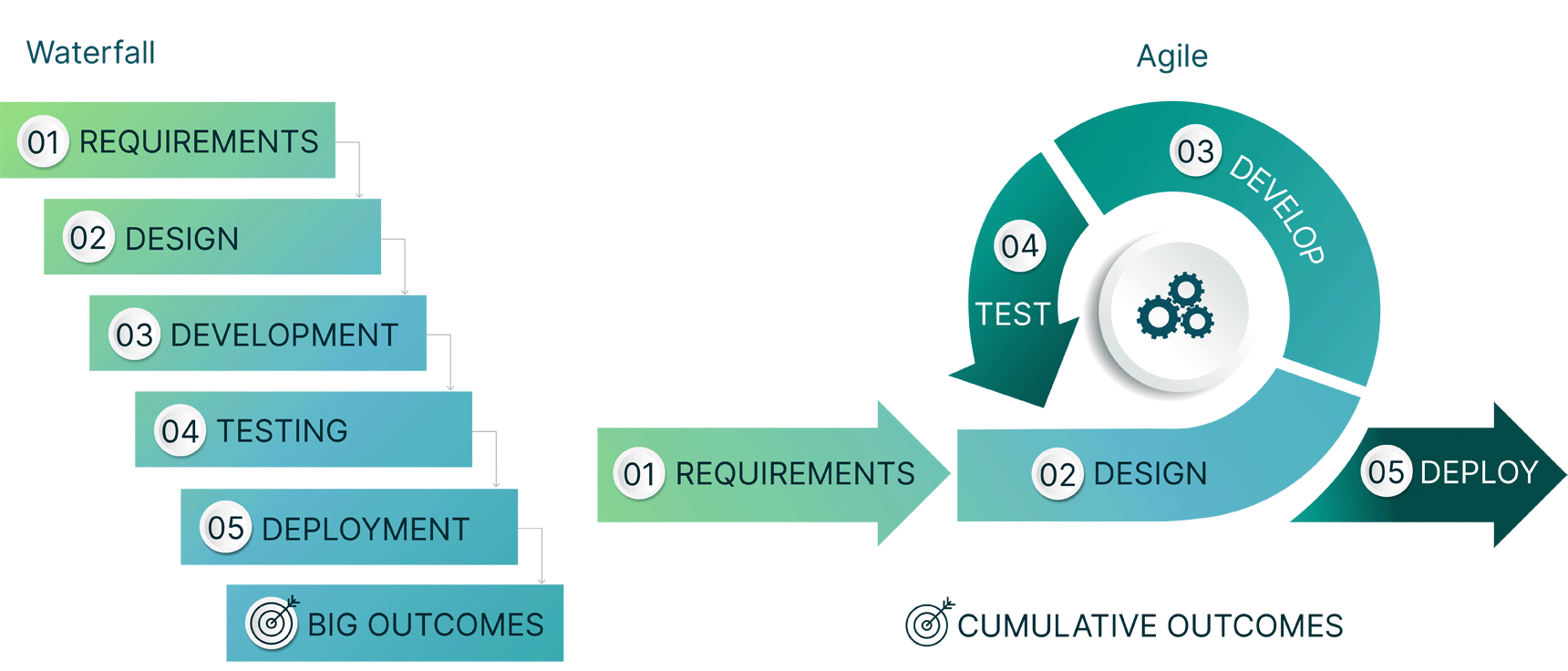
Over the past few decades the world has realized that traditional (waterfall) way of managing projects does not fit the modern world as customers’ requirements today is more dynamic than ever. Rapidly changing market preferences , investor decisions, disruptive technology , competitive environment now demands quicker delivery yet with more adaptability, and resilience in projects.
Agile project management (the term agile means ‘ flexible’ ) address these challenges as it work on the principle of incremental delivery with continuous collaboration with the stakeholders . This result-focused methodology has its humble beginning in the early 2000s when a group of software developers (including Jeff Sutherland, Bob Martin, Martin Fowler, Alistair Cockburn and other prominent personalities) met in Utah , US, delivered Agile Manifesto . Birth of “Agile Manifesto” , its values and principles was a significant breakthrough that laid foundation to manifold methodologies and practices.
| Agile Manifesto | ||
| Individuals and interactions | Over | Processes and Tools |
| Working Product | Over | Comprehensive Documentation |
| Customer Collaboration | Over | Contract Negotiation |
| Responding to Change | Over | Following a Plan |
That is, while there is value in the items on the right, we value the items on the left more
There are numerous methodologies, that is built on the foundation of the Agile Values and Principles . Below are the most popular agile methodologies. Agile methodologies by and large are centered around adaptive planning, self-organization and short delivery times.
1.Scrum
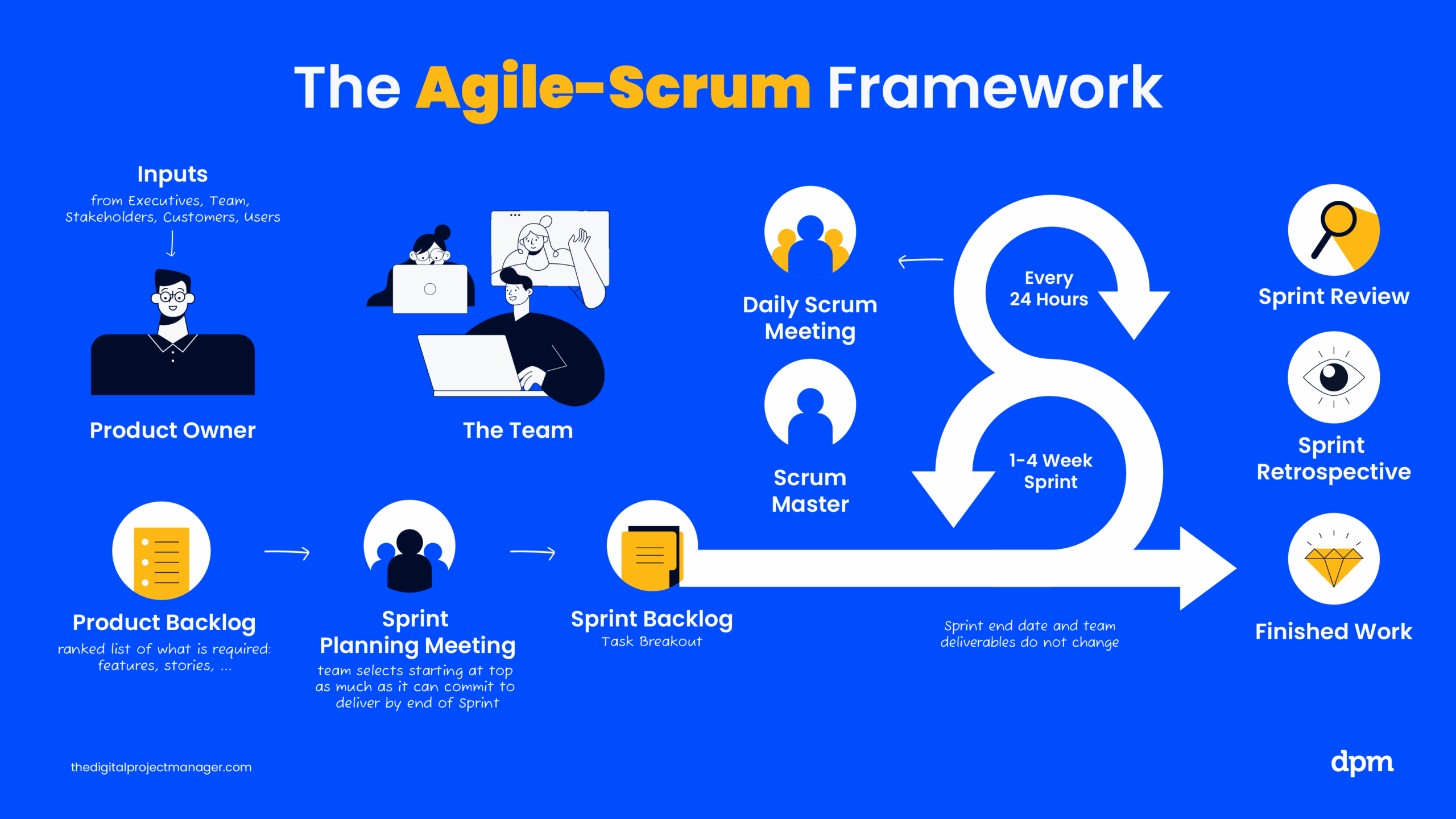
Scrum is a simple lightweight framework that helps people and organization to develop and sustain complex products. Ken Schwaber and Jeff Sutherland co developed the scrum methodology and the scrum guide. The Scrum Guide consists of specific Scrum Roles ( Product Owner, Scrum Master, Development Team ), Scrum Pillars, Scrum Events, Scrum Artifacts and Scrum Rules that binds the team together.
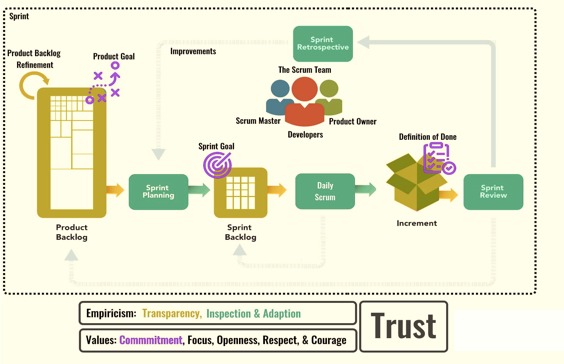
Following are the Scrum roles and the processes
The Scrum Team and its stakeholders inspect the results and adjust for the next Sprint.
Repeat the Process again for the next sprint.
Sprints are 1 to 4 week length cycle where ideas are turned into value . All the work necessary to achieve the Product Goal happen within sprints.
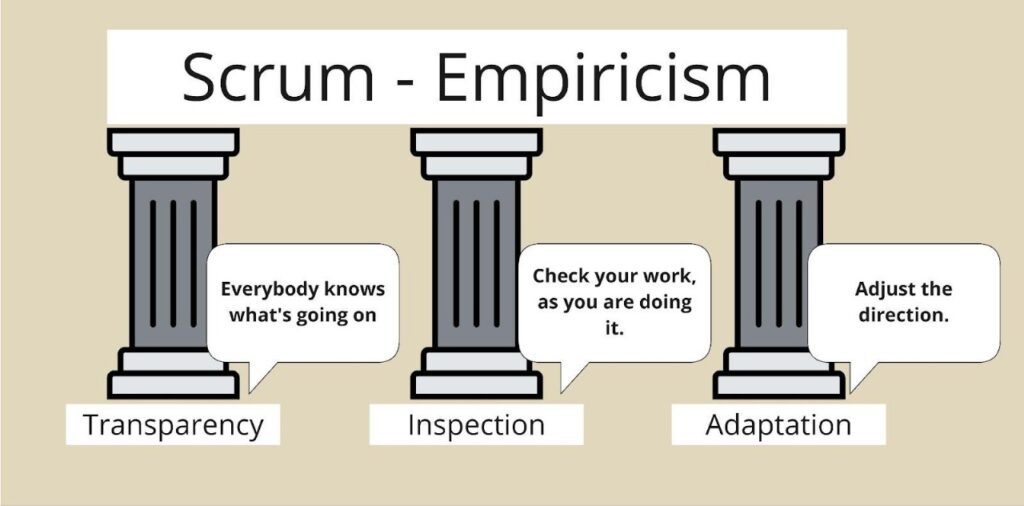
Scrum works under the core principles of Transparency, Inspection, Adaptation (TIA)
Transparency is ensuring the work to be visible to everyone to those who perform the work and receive the work. Transparency enables inspection
Inspection
Scrum artifacts and the progress towards agreed goals must be inspected frequently. At the end of each sprint, the increment is demonstrated to the product owner and customer through sprint reviews. Inspection results from a sprint acts as a feedback to next sprint. Inspection enables adaptation.
Adaptation is embracing changes and improving continuously. Transparency and Inspection drives adaptation. Transparency in the workflow and the results from inspection reveals the area of adjustment required in the product increment and processes.
2. Extreme Programming ( XP) :
This agile methodology was developed during 1990s by Kent Beck , who formalized its principles, values and practices in his book Extreme Programming : Embrace Change.
XP methodology is applicable for small to mid sized co-located teams , with dynamic requirements.
XP works under the 5 values viz., Communication, Simplicity, Feedback, Courage and Respect.
Communication : XP stresses on face to face communication, with visual tools like whiteboards or any other drawing mechanism.
Simplicity : XP based around the idea of identifying “simplest thing that will work” in order to identify waste such that it is easy to maintain, support and revise.
Feedback : XP emphasize on recognizing improvement areas through constant feedback. XP teams builds, receive feedback and adjusts.
Courage : XP teams takes “ effective action in the face of fear”. It includes courage to raise issues, courage to stop something that does not work, courage to accept feedback.
Respect : XP teams respect each other and always be courteous while communicating with each other, providing and receiving feedback and honours relationship in all instances.
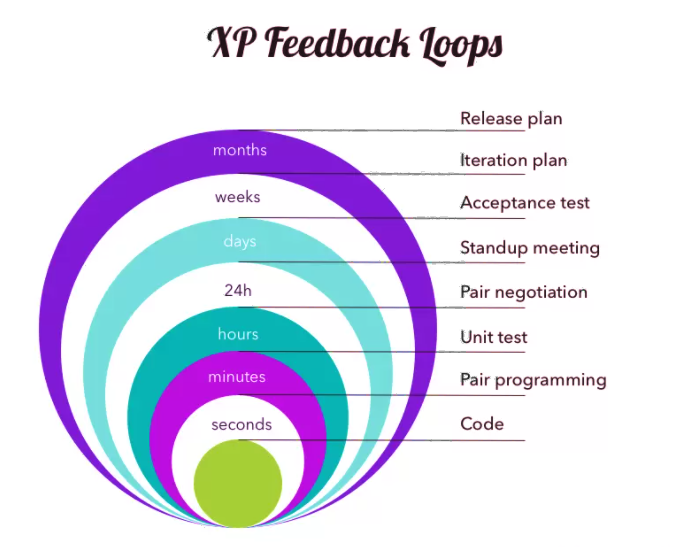
The values are applied through XP practices such as planning games, Small releases, Pair programming, collective ownership, Continuous integration, Informative workspace etc.,
In a nutshell, Extreme Programming is about taking the good agile practices to the extreme level.
3. Crystal
Crystal methodology is credited to Alistair Cockburn who developed for IBM in 1991.This method is direct outgrowth of agile manifesto. It focus on individuals and interactions over processes and tools. Crystal methodology is based on two core beliefs
1. Teams are enabled to find their own ways and methods to optimize workflows
2.The project team is best suited to determine how to tackle the work on every project, as every project is unique.
On the basis of team size, project priority, this methodology is classified into various colour families.
| Crystal Clear | Crystal Yellow | Crystal Orange | Crystal Red | Crystal Maroon | Diamond & Sapphire | |
| Team size | 1 to 6 | 7-20 | 21-40 | 40-80 | 80 to 200 | 200+ |
| Nature of Project | Single workspace,Short- term Project | Feedback from real users involved with automatic testing | Medium – sized project1-2 years with a release every 3-4 months | Smaller teams are formed withinTraditional development method is followed | Large ProjectsMethods vary based on the need of the application. | Very large project Potential risk of human life is involved |
https://www.toolsqa.com/agile/crystal-method
Cockburn emphasize on the following three traits of Crystal methodology
1. Human Powered- The project should be flexible and tailored to the preferred work modalities of the team involved.
2. Adaptive – There are no fixed tools ; tools can be altered to meet team’s specific needs
3.Ultra-light – It does not require huge documentation for reporting as it facilitates more face to face osmotic communication.
In a nutshell from the words of Cockburn, crystal works with the power invested by people, extremely light and stretch-to-fit
To summarize agile methodologies entrust continuous delivery of value-adding product, by facilitating constant communication with the client and among the team members.
History of the Information Radiators : 1980s – Visual Management: The concept of visual control and visual management originated in Japan...
PMI® has announced that starting 1st July 2020, the PMP® exam will reflect new content and the last day to take...

Lean is a quality improvement model that improve processes by removing waste or non-value added activities. Lean achieves this by...

As we kick off 2022, COVID-19 saga with its novel variants continues to throttle traditional working environment and challenges organizations...
Over the past few decades the world has realized that traditional (waterfall) way of managing projects does not fit the...
The concept of Agile also is one such adaptation that arose as a response to rapid change, growing complexity and...